
Domaine Berthelemot is a family business based in Meursault and cultivating 15 hectares in the Côte de Beaune area (Meursault, Puligny-Montrachet, Pommard, Beaune....). Our pledge is to produce wines revealing the true quality characteristics of the land and take care to protect the environment. Our wines are certified "organic" from vintage 2021.
 Download PDF
The vine
Plot /climat
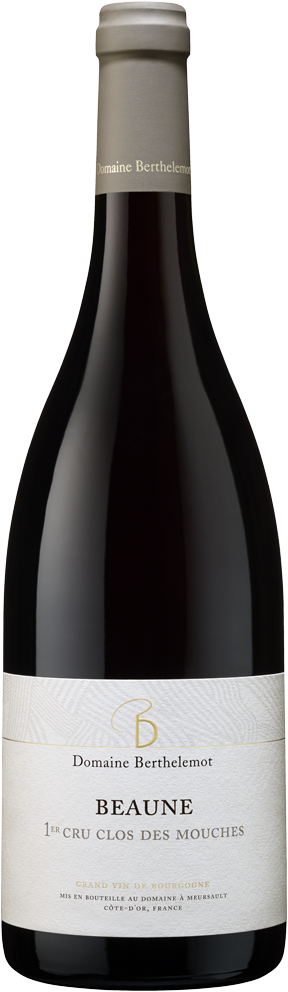
Clos des Mouches (total surface area: 25ha 18a)
History
This mid-slope climat is exposed to the sun throughout the day. In the past, it was more populated with flowers and bushes than vines. Bees particularly loved this area. In medieval French, "mouches" actually referred to bees ("abeilles" in French). Should this wine be called "Clos des Abeilles"? Maurice Drouhin, in the post-war period, created a vast vineyard on the Clos des Mouches for his eponymous wine house and played a major role in the fame of this climat.
Soil
The soil pit we dug during the replanting in 2023 revealed that there was once an old quarry here. The stones from this quarry were used to build Beaune. The clay-limestone soil remains very stony.
Our plot(s)
Surface area: 58 ares. Located between 250 and 300 meters. South / south-east exposure, at the foot of the Montagne de Saint Désiré, on the edge of the Pommard Premier Cru vineyards. The slope ranges from 5% to 15%.
-
Age of vines
- Planting date Surface
- 1958 28.30a
- 1968 15.03a
- 1986 30.05a
The wine
Description
100% Pinot Noir from handpicked grapes; raised in oak casks.
Taste
Among the three Beaune Premier Crus produced by the estate, Clos des Mouches is the most profound. Ripe red fruits, black fruits, and liquorice blend with subtle toasted notes. The mouth shows character from the attack through to the finish, with powerful tannins and a dense aromatic profile. This wine has excellent aging potential, developing notes of dried fruits and leather over time.
Serving temperature
15/16°C. It is recommended to decant recent vintages so as to enhance the aroma.
The vintage
- 2024 : Saved from water. The end of winter was marked by mild temperatures and significant rainfall, allowing partial replenishment of groundwater reserves. Spring was characterized by frequent and sustained rainfall, resulting in high cryptogamic pressure and increased vineyard workload. A period of milder weather during flowering allowed early Chardonnay parcels to set fruit under favorable conditions. In contrast, cooler temperatures during flowering led to flower abortion in Pinot Noir. For the second time in ten years, the summer passed without a heatwave, easing water stress on vines with reduced vigor. These cool and humid conditions slowed maturation, with veraison only fully completed in the final days of August. An anticyclonic weather pattern established over the Côte d'Or during the second week of September, enabling the start of harvest on September 13th in excellent conditions. The white wines show aromatic precision, tension, with delicate profile. The red wines present fresh, crunchy fruit with fine tannins. The 2024 vintage is elegant and refined, offering classic Burgundy expression and strong ageing potential.